
How to cut the public service? Smartly, compassionately, deeply
By Allen Sutherland, President and CEO
Published on November 6, 2025 in the Ottawa Citizen.
Allen Sutherland: Workforce adjustments may test core public service values including respect for democracy

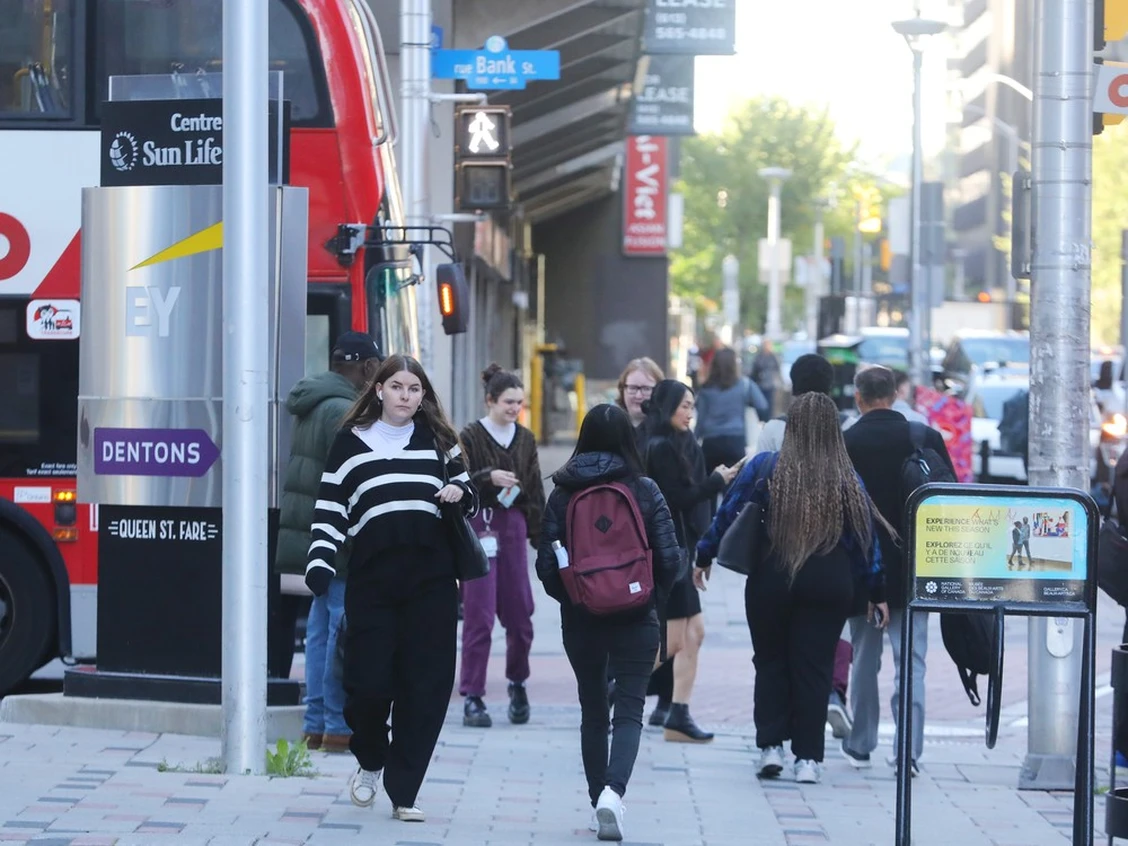
Public servants returning to work in downtown Ottawa, September 10, 2024. Photo by JEAN LEVAC /POSTMEDIA
The crucible of workforce adjustment will reveal much about the state of federal public service culture and values.
On November 4, as part of his budget speech, Finance Minister Francois-Philippe Champagne formally announced long expected, sweeping reductions in the public service. The headline take-away was a reduction of 16,000 federal public servants this year and a drop of 40,000 overall by 2028-29. There are further statements in the Budget that “a leaner public service is a more impactful public service”, as well as an effort to impress upon federal public servants that “the government understands that transitions can be difficult and is committed to minimising hardship for federal employees”. Be that as it may, these reductions will force difficult decisions on public servants at all levels and in organizations across the public service.
While it might strike some as ironic, it may be fortuitous that over the last 2 years employees throughout the federal public service were engaged in what were described as “renewal conversations” on public service values and ethics. During these conversations, then Clerk of the Privy Council, John Hannaford, observed that “our public service values and ethics are our compass to guide us through times of change”. Well, the winds of change in the form of workforce adjustment are blowing hard. The question is the extent to which workforce adjustments will be guided by the compass of public service values and ethics.
Workforce adjustment tests core public service values including respect for democracy which comes to the fore as these potentially wrenching changes to the workplace are loyally implemented. The value of respect for people will be front and centre when it comes to treating all employees with respect and fairness, even as some leave the public service.
The details of the Carney Government’s approach to workforce adjustment will become clearer in coming weeks. Approaches will no doubt vary across the 300 or so federal government organizations. That said, Champagne has committed the Carney Government to an approach to workforce adjustment that is transparent, compassionate, fair and smart. These are all very positive sounding adjectives that together set an appropriately high bar for the coming wave of workforce adjustment.
Transparency is important because its absence creates unnecessary fear, uncertainty and even organizational paralysis. Public servants, like any other employee, benefit from knowing where they stand. Now that the budget has been announced, the sooner the procedures and next steps of workforce adjustment become known the better it will be for individuals and organizations. Now is not the time for a hesitant and secretive roll-out.
Transparency will lift some of the clouds but Minister Champagne is correct in also insisting that changes be administered compassionately. Helping those affected cope with the impact on them personally and, where necessary, helping those impacted move on to the next phase in their careers is the bare minimum of compassionate management in these circumstances. It will also reverberate among “survivors”, who need to know that their organization reflects values they can believe in.
Fairness is another key value which speaks to ensuring that processes are equitable. Workforce adjustment often entails such human resources exercises as alternation where a public servant might volunteer to leave in exchange for a benefits package, or possibly a situation where current staff are required to compete for a limited number of jobs in the new, smaller organization. Both processes are impactful and stressful, requiring careful management to ensure process fairness.
Finally, Champagne has argued that the changes need to be “smart”. This attribute is forward-looking. It means that workforce adjustment must lead to a better public service, one that is fit for purpose, more responsive to citizens and one that has enhanced capacity in scarce and necessary skills such as operations and program management, advanced analytics and social media strategic communications. A smart public service is one that skilfully uses artificial intelligence as a strategic asset and not as either a vague cure-all or as a cover for large capacity reductions.
Consistent with the commitment to a smart approach, the Budget 2025 indicated that the federal government would continue to build the next generation of public service leaders and protect diversity in the public service.
Significant workforce adjustment within the public service seems to occur every generation – approximately every 15 years or so. Done right, it can be part of public service revitalization, as well as being a meaningful expression of public service values and ethics. The markers have been set. The difficult job of how remains.