
Seven things to watch as Parliament resumes
By Allen Sutherland, President and CEO
Published on January 27, 2026 in the Ottawa Citizen
Parliamentarians return to Ottawa this week. What should we expect?
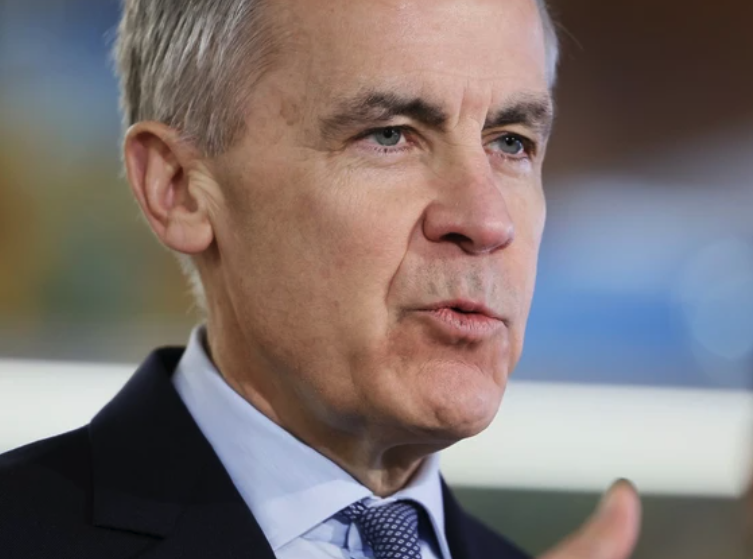
Canada’s Prime Minister Mark Carney makes an announcement about affordability at a grocery store Monday. Photo by BLAIR GABLE /POSTMEDIA
In 2025, the government of Prime Minister Mark Carney laid out the foundations of its agenda.
There was a notable consistency of message from the prime minister’s mandate letter released in May through to the federal budget presented by Finance Minister François-Phillippe Champagne in early November.
The foundation was built upon with the passage of several bills, including the One Canadian Economy Act on internal free trade and labour mobility in Canada at the federal level.
In 2026, the emphasis will shift even more strongly from broad plans to implementation, and, while it will not be the focus of all of the government’s activities, Parliament will be centre stage for many of them.
So, will the government be able to deliver on its agenda? Here are seven things to watch as Parliament reconvenes this week.
All eyes on the budget
It starts with the Budget Implementation Act.
Look to the opposition to continue to rag the puck in search of concessions and political vulnerabilities.
Among other things, delay will postpone formal implementation of the much-anticipated public service retirement incentive option that could ease and speed workforce adjustment for impacted public servants.
Davos momentum
The prime minister’s remarkable Davos speech continues to echo within and outside Canada. Odds are that its themes will continue to reverberate on the Hill in coming weeks.
Carney seems to have captured the global moment and crystallized global discomfort. Even Conservative Leader Pierre Poilievre complimented the prime minister for a “well-crafted and eloquently delivered” speech, offering broad support for its directions before pivoting to specifics, including food inflation, pipelines, boosting the military and eliminating internal trade barriers.
It remains to be seen whether and how the government will build on this momentum. Of particular interest, there has been a lot of talk about the need for Canadians to “make sacrifices.” Is this the year this promise or threat becomes more tangible?
Keeping with the international side of the ledger, international developments from Gaza, Ukraine and Venezuela to shifting middle power alliances and the consequences of a ruptured world order suggest that Parliament and many of its committees will have one eye on the international scene.
Leadership questions abound
This weekend the Conservative Party leadership review will take place. Poilievre is expected to be reconfirmed, but it remains to be seen whether this impacts Conservative tactics and, crucially, appetite for an electoral rematch in the near term.
On March 29, the NDP leadership convention takes place. Avi Lewis is seen as the frontrunner and will be looking to create buzz as the “Mamdani of the North.”
Will CUSMA survive?
The deadline itself may be immaterial as the gamesmanship is already underway, but July 1 is when the first formal joint review of the Canada-US-Mexico Agreement’s operation begins.
While it will be easy to be distracted by CUSMA theatrics, the best and most sanity-enhancing approach will be “to keep calm and carry on.”
Controversial legislation
The business of Parliament will create opportunities for opposition parties to open up new fronts to criticize the government.
Some bills before Parliament, such as C-8 (An Act respecting cybersecurity) and C-9 (Combatting Hate Act) promise to be both sensitive and controversial.
Expect passions to run high as the legislation engages differing conceptions of freedom of speech, human rights and social media’s role in the public square.
Private members’ bills could provide an opportunity to capitalize on the perceived weakness of Liberals on ethics issues.
A potential referendum looms
It will be interesting to see where the Bloc Quebecois will attempt to grab the spotlight.
A provincial election in Quebec is required by legislation no later than October 5. Look for the Bloc to highlight or manufacture perceived anti-Quebec bias in areas such as supply management, the environment or the aluminum sector.
Will Carney get his majority?
Finally, the raw political theatre of floor crossing could quickly capture attention, as it did in the late fall to the detriment of budget scrutiny.
There may not be all that much practical difference between a stable minority and a razor thin majority, but the symbolism carries weight.
Watching these developments, some observers are even suggesting that these developments and some polling might favour a “planned fall” by the Carney government to capitalize on current momentum to seek a fresh (and they hope majority) mandate.